Age-Related Macular Degeneration: Protecting Your Central Vision as You Age
Healthy aging includes taking care of your vision. One condition that deserves particular attention is age-related macular degeneration, commonly known as AMD.
AMD affects the central vision needed to read, drive, recognize faces, and see fine details. It is a leading cause of vision loss among older adults, but regular eye examinations can help identify it before a person notices significant changes.
At Glacier Eye Clinic, we provide retinal care and ongoing support for patients with macular degeneration throughout Kalispell, the Flathead Valley and Northwest Montana.
What Is Age-Related Macular Degeneration?
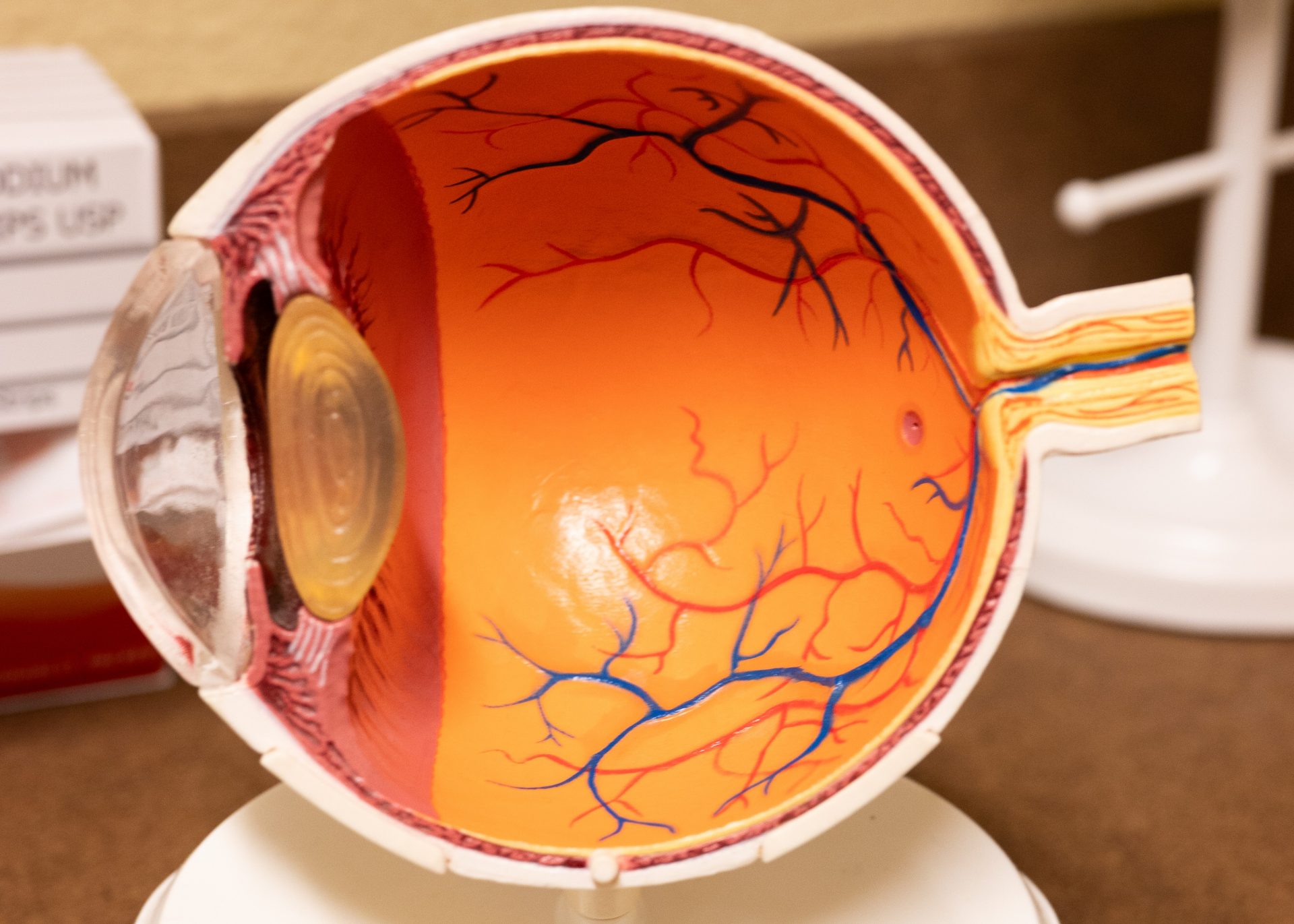
AMD affects the macula, a small but essential part of the retina at the back of the eye. The macula is responsible for sharp, straight-ahead vision.
When the macula becomes damaged, a person may have difficulty seeing details in the center of their visual field. Peripheral, or side, vision is generally preserved, so AMD does not typically cause complete blindness. However, the loss of central vision can significantly affect daily life.
What Are the Two Types of AMD?
There are two primary forms of age-related macular degeneration: dry AMD and wet AMD.
Dry AMD
Dry AMD is the more common form. It occurs as the macula gradually becomes thinner with age and small deposits called drusen develop beneath the retina.
Dry AMD often progresses slowly through early, intermediate, and late stages. A patient may have the condition for years without noticing significant symptoms.
Wet AMD
Wet AMD is less common but can cause faster and more serious changes to central vision. It develops when abnormal blood vessels grow beneath the retina. These vessels may leak fluid or blood and damage the macula.
Treatments are available for wet AMD, and prompt care may help prevent additional vision loss.
What Are the Symptoms of AMD?
Early AMD may not cause noticeable symptoms. As the condition progresses, changes can include:
- Blurry or distorted central vision
- Straight lines appearing wavy or crooked
- A dark, blurry or blank area in the center of vision
- Difficulty reading or recognizing faces
- Needing brighter light for close-up activities
- Colors appearing less vivid
- Greater difficulty adjusting to low-light conditions
Straight lines suddenly appearing wavy can be a warning sign of advanced AMD. Contact your eye doctor promptly if you notice this or another new change in your central vision.
Who Is at Risk?
Age is one of the most significant risk factors for AMD, particularly after age 55. Risk may also be higher for people who:
- Have a family history of AMD
- Smoke
- Have high blood pressure or high cholesterol
- Have cardiovascular disease
- Are overweight or physically inactive
- Eat a diet low in nutrient-rich foods
You cannot change your age or family history, but understanding your risk can help you make informed decisions about examinations and healthy habits.
How Is AMD Detected?
Because early AMD may not affect how well you see, regular comprehensive dilated eye examinations are important.
During an examination, your eye doctor can evaluate the retina and look for changes associated with AMD. Additional imaging, such as optical coherence tomography, may be used to create detailed images of the retinal layers and detect fluid or other changes.
The recommended examination schedule depends on your age, health, family history and existing eye conditions. Ask your eye doctor how often your eyes should be examined.
Can You Lower Your Risk?
No strategy can guarantee that AMD will be prevented, but several healthy choices may help lower the risk or slow its progression:
- Do not smoke.
- Stay physically active.
- Manage blood pressure and cholesterol.
- Eat a balanced diet that includes leafy green vegetables and fish.
- Maintain a healthy weight.
- Keep recommended eye appointments.
These habits support overall health as well as eye health.
What About Vitamins for AMD?
Certain combinations of vitamins and minerals may help some patients with intermediate or late AMD reduce their risk of further progression. These specialized supplements are not appropriate for everyone and are not the same as an ordinary daily multivitamin.
Do not begin an eye-health supplement simply because you are concerned about AMD. Your eye doctor can determine whether a specific supplement formula is appropriate based on your examination findings and health history.
How Is AMD Treated?
Treatment depends on the type and stage of the condition.
Early AMD may be monitored with regular examinations and healthy lifestyle choices. Some patients with intermediate or late AMD may benefit from an eye-doctor-recommended supplement formula.
Wet AMD is commonly treated with medication delivered through injections into the eye. These medications help control abnormal blood-vessel growth and leakage. Following the recommended treatment schedule is important because delayed or missed treatment may allow the condition to progress.
Your doctor will explain the diagnosis, available treatments, and what you can expect during ongoing care.
Supporting Someone With Vision Changes
Family members and caregivers can play an important role. A loved one with AMD may need additional lighting, larger print, increased contrast, or help making the home safer and easier to navigate.
Vision rehabilitation and low-vision devices may also help people remain active and independent. An AMD diagnosis can feel overwhelming, but patients and families do not have to navigate it alone.
Make Eye Health Part of Healthy Aging
Getting older does not automatically mean losing your sight. Regular eye examinations, awareness of vision changes, and timely treatment can help protect the vision you rely on every day.
If you are over age 55, have a family history of AMD, or have noticed a change in your central vision, schedule a comprehensive eye examination.
Call Glacier Eye Clinic at 406-257-2020 to request an appointment. Our team is proud to provide specialized eye care to patients throughout Kalispell and Northwest Montana.