
Your Diabetic Eye Exam: What to Expect and How Glacier Eye Clinic Helps Protect Your Vision
If you live with diabetes, regular eye care isn’t just about updating your glasses. A diabetic eye exam is an important medical evaluation that looks for changes in the retina and other parts of the eye—often before they affect your vision.
Knowing what to expect can make the appointment easier and help you prepare for a productive conversation with your eye-care team.
Why Is a Diabetic Eye Exam Different From a Vision Check?
A basic vision screening asks whether you can see letters or objects clearly. That information helps, but it doesn’t provide a complete picture of eye health.
Diabetic retinopathy begins in the retina’s small blood vessels. A person may still read an eye chart well even when early bleeding, leakage, or changes in circulation are developing. A comprehensive dilated exam lets the doctor look beyond visual sharpness and evaluate the structures inside the eye.
The examination also looks for other conditions associated with diabetes, including diabetic macular edema, cataracts, and glaucoma.
Before Your Appointment
Preparing a few details ahead of time helps your eye-care team understand your health more fully. Consider bringing:
- A current list of medications and insulin
- The name and contact information of your primary-care or diabetes provider
- Your most recent A1C result, if available
- Information about blood pressure, cholesterol or kidney concerns
- A list of vision changes or symptoms you have noticed
- Your current glasses and contact lenses
- Sunglasses for comfort after dilation
Because dilating drops can temporarily blur near vision and increase light sensitivity, ask whether you should arrange for someone to drive you, especially if you haven’t been dilated before or know dilation affects you significantly.
What Happens During the Examination?
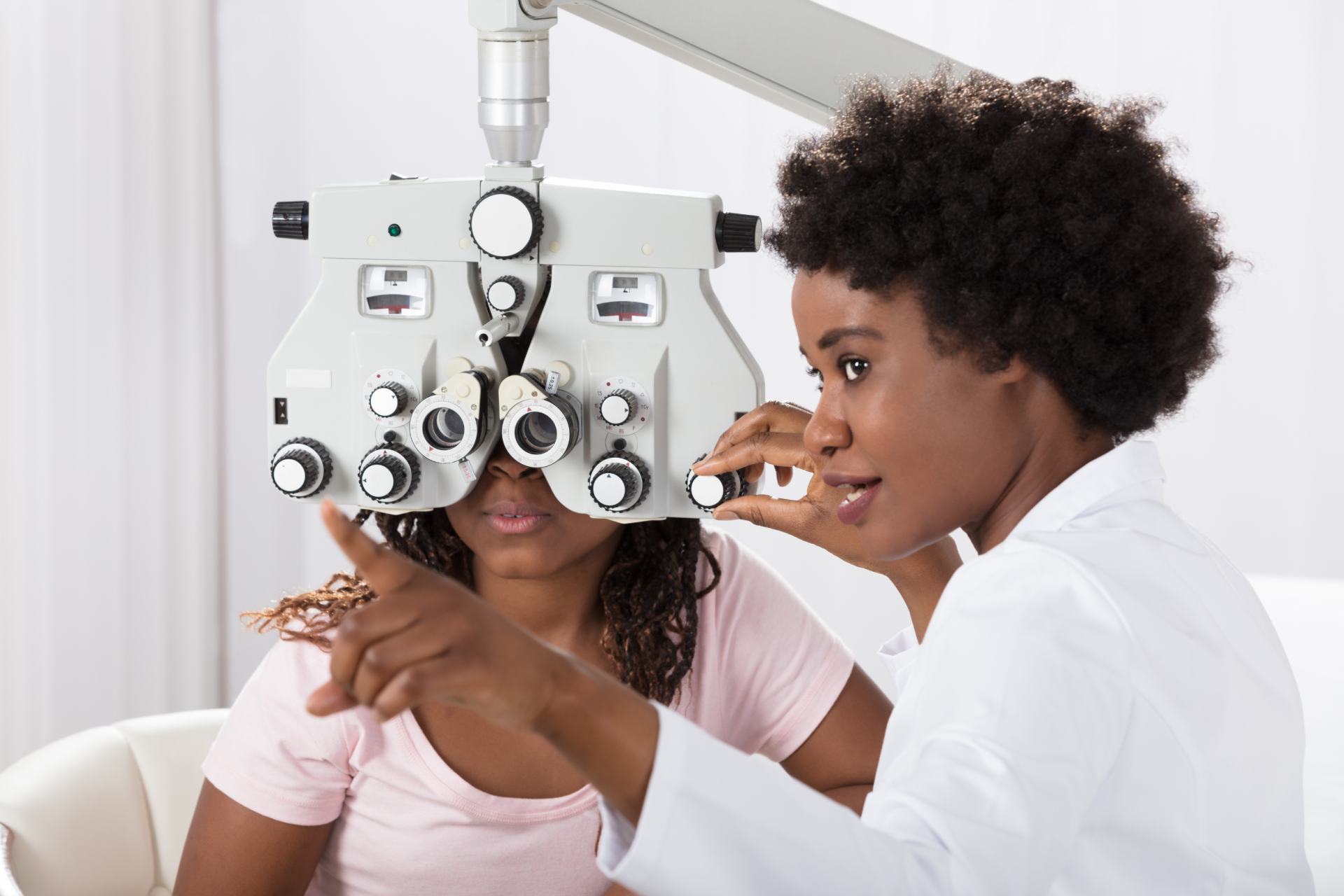
Every appointment is tailored to the patient, but a diabetic eye examination may include several important steps.
Vision testing: Your care team checks how clearly you see at different distances and whether your prescription has changed. Fluctuating blood sugar can sometimes cause temporary changes in vision, so mention if your vision varies from day to day.
Eye-pressure measurement: Diabetes is associated with an increased risk of glaucoma. Measuring the pressure inside the eyes provides one piece of information used to assess that risk.
Examination of the front of the eye: The doctor evaluates the cornea, iris, and natural lens. This can reveal dry-eye concerns, inflammation, or cataracts.
Pupil dilation: Eye drops widen the pupils, allowing a more complete view of the retina and optic nerve. The doctor looks for small areas of bleeding, leaking blood vessels, swelling, abnormal vessel growth, scar tissue, and other retinal changes.
Retinal imaging or other diagnostic testing: When appropriate, advanced imaging can create detailed views of the retinal layers, detect fluid or swelling, and document changes for comparison at future visits. The doctor may recommend additional testing if they need to assess retinal circulation or plan treatment.
What If the Examination Finds Retinopathy?
A diagnosis of diabetic retinopathy does not automatically mean that you will lose your vision or need immediate surgery. The next step depends on how severe the changes are and where they occur.
Mild or moderate retinopathy may be monitored at regular intervals while you continue working with your medical team on blood sugar, blood pressure, and cholesterol. Your doctor may recommend more frequent eye exams to identify progression as early as possible.
If the retina swells or the disease advances, you may need treatment. Options can include:
- Eye injections: Medications can reduce abnormal blood-vessel activity and retinal swelling.
- Laser procedures: Laser treatment may reduce leakage or treat abnormal blood vessels.
- Retinal surgery: Your doctor may recommend surgery for significant bleeding, scar tissue, retinal traction, or retinal detachment.
Your retinal specialist will explain why they recommend the treatment, its goals, and the follow-up schedule.
Why Follow-Up Matters
Diabetic eye disease is a long-term condition that can change over time. Following the recommended schedule lets your doctor compare exam findings and imaging, watch for new swelling or bleeding, and adjust treatment as needed.
It is equally important to continue regular care with your primary-care or diabetes team. Blood sugar, blood pressure, and cholesterol all affect the small blood vessels in the retina. Eye treatment and medical diabetes management work together; neither replaces the other.
What Makes Glacier Eye Clinic’s Approach Distinctive?
Glacier Eye Clinic provides comprehensive retinal care within one local eye-care system. Patients can access routine and comprehensive eye examinations, advanced diagnostic testing, medical and procedural treatment, and, when necessary, retinal surgery.
Surgical retina specialists Dr. Aaron Alme and Dr. Tyler Ofstad perform retinal surgery, including repairing retinal detachments, and manage complex vitreous and retinal diseases. For patients with diabetic retinopathy, treatment options may include eye drops, laser procedures, injections, and surgery, depending on the condition and its severity.
This full range of care creates continuity. With a connected team, a patient can move from detection and diagnostic testing to specialist evaluation, treatment, and ongoing monitoring. Glacier Eye Clinic also communicates with primary-care providers and other medical specialists to help coordinate the eye-health portion of diabetes care.
For patients throughout the Flathead Valley and Northwest Montana, that means access to advanced retinal expertise and treatment closer to home.
Make the Appointment Before Symptoms Begin
The best time to schedule a diabetic eye exam is before you notice vision changes. If you have type 1 or type 2 diabetes, ask your providers how often you should be examined and keep those visits on your annual healthcare calendar.
If you are pregnant and have pre-existing diabetes, have recently been diagnosed with diabetes, or are experiencing new vision symptoms, contact your medical and eye-care teams for individualized guidance.
To schedule a diabetic eye examination with Glacier Eye Clinic in Kalispell or Polson, call 406-257-2020.